
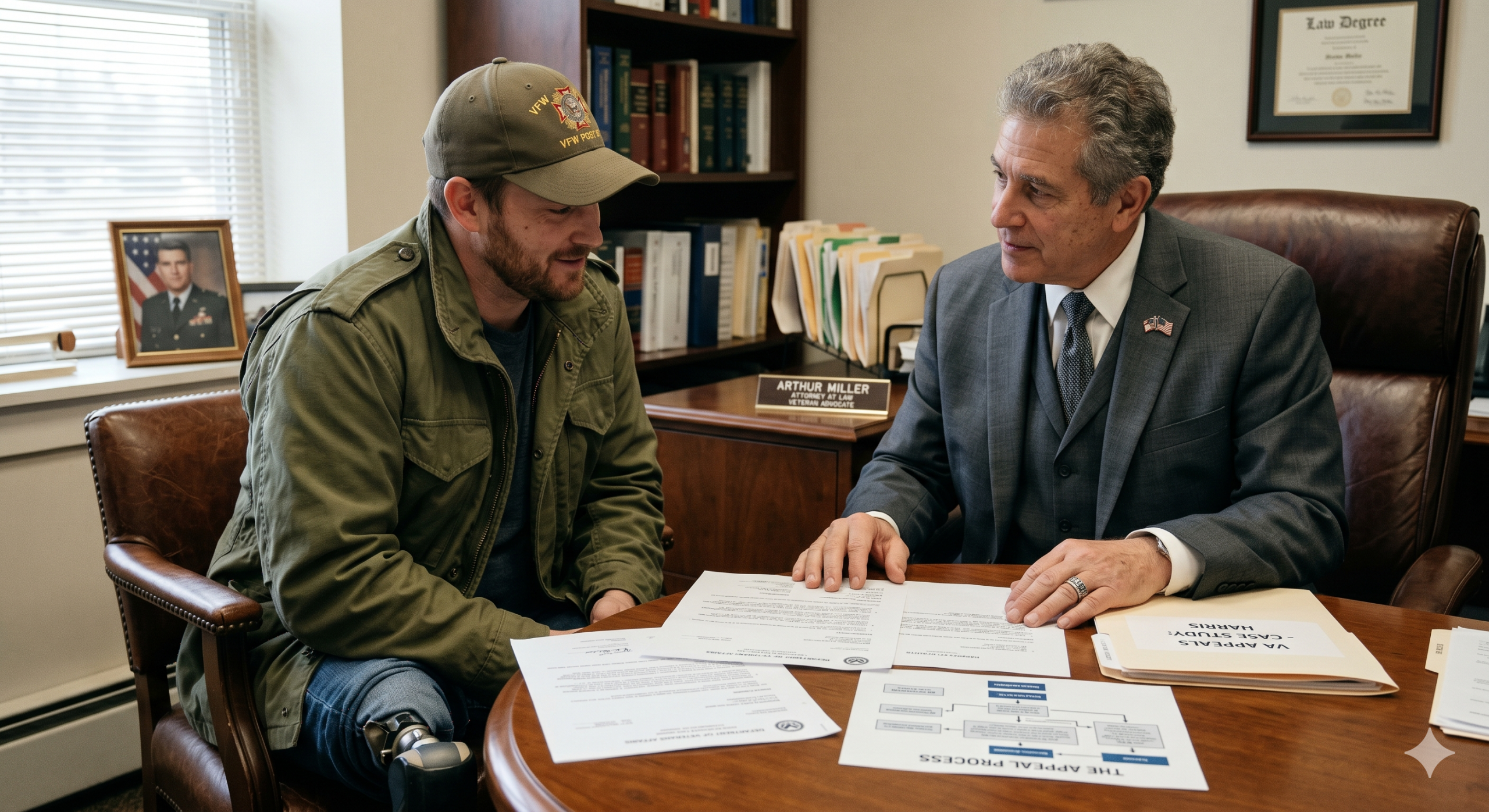
The VA issued a decision on your disability claim. Maybe it was a full denial. Maybe it was a rating you believe is far too low. Maybe they granted one condition and denied three others that are just as real and just as connected to your service.
Whatever the specific outcome, you know it is wrong. And you want to fight it.
The good news: you have the right to appeal every VA decision, and veterans who appeal with the right strategy and the right support win regularly. The harder truth: the appeals process involves real choices with real consequences, and picking the wrong path can cost you time, money, and in some cases, the effective date that determines how far back your back pay goes.
This guide will walk you through every appeal option available to you under the Appeals Modernization Act, what each lane is, when it works, what it requires, and how to choose between them. By the end, you will understand your options clearly enough to act.
If you received a rating decision in the last year, you are likely within the window to appeal without losing your original effective date. Do not let that window close before you understand what it protects.
Every VA appeal starts with the same critical fact: you have one year from the date of your rating decision to file an appeal and preserve your effective date.
Your effective date is the date your original claim was filed. It determines how far back your retroactive benefits, your back pay, will run when you eventually win. Preserve it, and a successful appeal can mean years of back pay. Lose it, and you may have to start over with a new filing date.
Missing the one-year window does not mean you can never pursue benefits. It means your new claim starts from today, not from the date you first filed. For a veteran with a 70% combined rating seeking a 100% determination, the difference between preserving and losing that effective date can be tens of thousands of dollars.
Check your rating decision letter. Find the date it was issued. Count one year forward. That is your deadline. Everything below is only relevant if you act before it passes.
VA appeals filed after February 19, 2019, are governed by the Appeals Modernization Act (AMA), which restructured the appeals process into three distinct lanes. Each has a different purpose, requires different evidence, and suits different situations. Choosing the right lane is one of the most consequential decisions you will make in your appeal.
Here is how they compare at a glance, followed by a detailed breakdown of each:
| Lane | Best when... | Timeline | New evidence? | Attorney value |
|---|---|---|---|---|
| Supplemental Claim | You have new evidence that addresses the denial reason directly | 4–6 months avg. | Required | Moderate — an informal conference can be requested; error identification is key |
| Higher-Level Review | The VA made a clear factual or procedural error with no new evidence needed | 4–5 months avg. | Not allowed | Prior lanes failed, or you have a complex legal argument to make |
| Board of Veterans' Appeals | Prior lanes failed or you have a complex legal argument to make | 2–5+ years | Optional | Essential — legal argument, hearing preparation, and case law knowledge matter most here |
A Supplemental Claim is the right move when you have new and relevant evidence that was not part of the VA's original decision, evidence that directly addresses the specific reason your claim was denied.
The VA is required to give your case a genuine, fresh review when you submit a Supplemental Claim with qualifying new evidence. This is not a rubber-stamp of the previous decision; it is a new adjudication based on a more complete record.
What counts as new and relevant evidence?
When the Supplemental Claim lane makes sense:
Important limitation:
The evidence must genuinely be new, not already in the file at the time of the decision, and it must be relevant to the denial reason. Submitting evidence that the VA already had, or evidence that doesn't address why you were denied, will not satisfy the standard and will result in another denial without fixing the underlying problem.
Timeline: Supplemental Claims average 4–6 months for a decision, making this typically the fastest appeal path when strong new evidence is available.
A Higher-Level Review asks a senior VA claims adjudicator, someone with more experience than the original decision-maker, to take a fresh look at your case. The critical distinction from the Supplemental Claim lane: no new evidence is submitted. The reviewer works only with what was in your file at the time of the original decision.
This makes the Higher-Level Review lane a fit for a specific situation: the evidence was adequate, but the VA adjudicator made an error. They may have applied the wrong rating criteria. They may have cited findings that are irrelevant to your claim. They may have had records in the file that they clearly did not review. These are the kinds of clear and unmistakable errors that a second, more experienced set of eyes should catch.
When the Higher-Level Review lane makes sense:
The informal conference option:
One feature of the Higher-Level Review that many veterans don't know about: you or your representative can request an informal conference with the reviewing adjudicator by phone. This is not a hearing, no testimony, no formal record. It is an opportunity to point out specifically where you believe the original decision went wrong. A skilled representative who knows how to frame those error arguments can make this conversation count.
Critical limitation:
If the Higher-Level Review is denied, you cannot simply retry the same lane again. Your next options are a Supplemental Claim (with new evidence) or a Board appeal. This is why the Higher-Level Review is best reserved for situations where the error is clear, not as a first step when the real problem is an evidence gap.
Timeline: Higher-Level Reviews average 4–5 months. Similar speed to Supplemental Claims, but limited by the no-new-evidence constraint.
A Board of Veterans' Appeals (BVA) appeal takes your case to Washington, D.C., where a Veterans Law Judge reviews the record. This is the most thorough and substantive level of review available before a federal court, and the level where legal arguments, case law, and experienced advocacy matter most.
Veterans who reach the Board after one or more prior denials often have cases where the VA has made persistent errors, where the legal framework for service connection is complex, or where the evidence picture is strong but the lower-level review process has consistently failed to recognize it. The Board is where those patterns can finally be corrected, but it requires patience and strategy.
Your three docket choices at the Board:
Direct Review: You submit no new evidence and request no hearing. A Veterans Law Judge reviews your existing record and issues a decision. This is the fastest Board track, but it offers no opportunity to strengthen your file. Choose this when your record is strong, and the error is legal, not evidentiary.
Evidence Submission: You submit new evidence without requesting a hearing. Useful when you have additional documentation, a new nexus opinion, updated medical records, additional buddy letters, that you want before the judge without needing in-person testimony.
Hearing Request: You testify before a Veterans Law Judge, either in person in Washington or by videoconference. This is the most involved and the longest-waiting option, but it gives you the chance to tell your story directly to the person deciding your case. Hearing testimony can be powerful when the human reality of your service and its consequences is not adequately captured in the written record.
Board appeals currently take between two and five or more years to reach a decision, depending on the docket. This is a real commitment, but for veterans with strong cases that have been wrongly denied at every prior level, the Board is often where justice is finally delivered.
What happens after a Board decision:
If the Board grants your appeal, the case is remanded to the regional office or decided directly. If it denies, you have two options: return to a Supplemental Claim lane with new evidence, or appeal to the Court of Appeals for Veterans Claims, a federal court that reviews whether the VA and BVA followed the law. The Court of Appeals level requires experienced legal representation and is where the most significant legal errors can be corrected on the record.
With three options and real consequences to each choice, the decision can feel overwhelming. Here is a practical framework:
Start by identifying why you were denied.
Read your rating decision carefully. The VA is required to state its reason for denial. The reason tells you what evidence gap or legal error needs to be corrected, and that determines your lane.
There is one more consideration that matters regardless of which lane you choose: the strength of the evidence you bring to it. The appeals process is, at its core, an evidence contest. A weak nexus opinion loses a Supplemental Claim the same way a strong one wins it. A Board hearing with no legal preparation loses the same way a prepared argument wins. The lane is the road; the evidence and argument are the vehicle.
The patterns that produce successful VA appeals are well-established. Veterans who win at the Supplemental Claim stage typically do so with one or more of the following:
At the Higher-Level Review level, wins come from identifying and clearly articulating the specific error in the original decision, wrong rating criteria applied, evidence ignored, or wrong standard used. The informal conference is an opportunity to walk the adjudicator directly to the mistake.
At the Board level, wins come from legal argument. Veterans Law Judges are not just re-reviewing the evidence; they are determining whether the VA correctly applied the law. Cases turn on whether the benefit of the doubt doctrine was applied correctly, whether the duty to assist was satisfied, whether the C&P exam was adequate, and whether the rating criteria were properly interpreted. These are legal questions that require legal expertise.
The most common mistakes in VA appeals are not about a lack of evidence. They are about strategy.
These are not failures of merit. They are failures of process. The VA appeals system is designed around legal frameworks and procedural requirements that most veterans have never been trained to navigate. That is not a moral failing; it is a reality that affects veterans across every service branch and every era.
You are permitted to file a VA appeal without an attorney. Veterans Service Organizations can assist with initial claims and some appeal stages at no cost. But there are situations where experienced legal representation makes a significant difference in outcome:
VA disability attorneys work on contingency; you pay nothing up front, and there are no out-of-pocket costs. If your attorney wins your case, their fee comes from a portion of your retroactive back pay, capped by federal law at 20% (or up to 33% for Court of Appeals cases). You owe nothing if you do not win.
The contingency structure means there is no financial risk to getting a professional opinion on your case. An experienced attorney can review your denial, identify the strongest path forward, and tell you honestly whether representation is likely to change your outcome.
If you have received a VA denial or a rating that does not reflect the reality of your conditions, you have options. Not every appeal requires an attorney. Not every case needs to go to the Board. But every veteran deserves to know what their options are before a deadline passes.
At Veterans Affairs Law, P.A., we review VA denials and rating decisions every day. We identify the strongest appeal path for the specific reason the VA denied a claim, and we give veterans an honest assessment of what their case is worth. We know what a winning nexus opinion looks like, what a Board argument needs to say, and where the VA's process fails, because we have been through it ourselves.
This is what we built this practice to do.
Get Your Free Case Evaluation
Call Veterans Affairs Law, P.A. today. We will review your denial letter or rating decision, explain which appeal lane gives you the best chance of success, and tell you honestly what we believe your case is worth.
We serve veterans throughout the Tampa Bay area, including Tampa, Bradenton, Sarasota, Venice, St. Petersburg, Clearwater, Port Charlotte, and Fort Myers.
For a comprehensive overview of the full VA disability claims and appeals process, see our Complete Guide to VA Disability Claims & Appeals.
Please call us at (941) 552-6677 or fill out the form below and someone from our team will be in touch shortly.


© 2026 Veterans Affairs Law | All Rights Reserved | Privacy Policy | LLM Info | Website by DigiSphere Marketing
